<img height="1" width="1" style="display:none" src="https://www.facebook.com/tr?id=705389681562533&amp;ev=PageView&amp;noscript=1">

HR & Payroll Insights: November 2026

HR & Payroll Insights is a monthly round-up of HR and payroll updates for organisations with employees in Singapore. Each edition summarises regulatory changes and compliance requirements relevant to employers and HR teams, from established local businesses to companies that have expanded into Singapore and are building familiarity with local employment rules. Where relevant, it also covers developments in other markets across the region.

This November edition looks at wage changes on both sides of the Causeway: the revised Progressive Wage Model (PWM) and Occupational Progressive Wage (OPW) requirements in Singapore, and the Budget 2027 measures in Malaysia affecting minimum wage, income tax and salary payments. With further increases scheduled for 2027 and 2028, organisations may wish to review pay structures and manpower budgets ahead of the new year.

In this edition

Singapore: Progressive Wage Model Updates for 2026-2028

Revised PWM and OPW requirements took effect in July and September 2026, with further increases scheduled for 2027 and 2028. The table below summarises the monthly wage requirements for full-time employees across different job levels in Food Services, Cleaning, Administrators, Drivers and Retail.

These are not the only sectors covered by PWM and OPW requirements. Employers should refer to the latest Ministry of Manpower (MOM) guidelines for the full requirements applicable to their business.


Sector
Effective from
2026
2027
2028
Food Services
1 July
S$2,220–S$2,875
S$2,360–S$3,020
S$2,500–S$3,165
Cleaning*
1 July
S$2,080–S$3,040
S$2,250–S$3,250
S$2,420–S$3,460
Administrators
1 July
S$2,170–S$3,340
S$2,360–S$3,520
-
Drivers
1 July
S$2,370–S$2,555
S$2,550–S$2,790
-
Retail
1 September
S$2,435–S$2,950
S$2,565–S$3,100
-


Figures are monthly gross wages excluding overtime, except *Cleaning, which is based on monthly basic wages and is also subject to the PWM Bonus. Administrators and Drivers fall under OPW. Retail's 2027 rates apply from 1 Sep 2027.

  What the changes mean for employers

Employers with employees in these sectors will need to ensure wages meet the applicable requirements by each effective date. As the increases are scheduled over several years, it may also help to factor them into manpower budgets for both 2027 and 2028. Our full PWM article covers the complete wage schedules by job level and next steps for HR and payroll teams.

Planning for the wage increases ahead?

If your organisation is reviewing pay structures or manpower costs for 2027 and beyond, speak with our team to discuss your workforce planning needs.

Across the Border: Malaysia Budget 2027

For organisations with employees in Malaysia, Budget 2027 introduces measures that may affect payroll costs, monthly tax deductions and how salaries are paid. Some measures remain subject to further clarification and implementation guidelines.

Minimum Wage

The minimum wage increases from RM1,700 to RM2,000 per month. Micro, small and medium enterprises (MSMEs) with annual sales below RM50 million are exempted. Affected employers may see higher wage costs and should review payroll budgets accordingly.
Individual Income Tax

Non-MSME employers may claim tax deductions on wages only when salaries are paid through bank accounts permitted under the Employment Act 1955. Salary payment processes should be reviewed against these conditions.
Salary Tax deductibility

Non-MSME employers may claim tax deductions on wages only when salaries are paid through bank accounts permitted under the Employment Act 1955. Salary payment processes should be reviewed against these conditions.

  What the changes mean for employers

Our full Malaysia Budget 2027 article explores the key HR and payroll measures, their implications for employers and how organisations can prepare.

Preparing your HR & payroll in Malaysia for 2027?

Our PayrollServe Malaysia team can support you.

HR Compliance Resource: Navigating HR Compliance

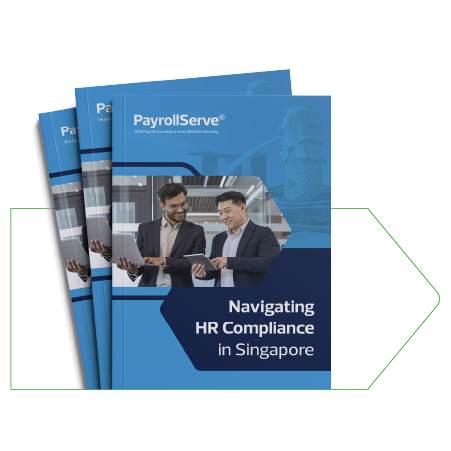
PRS Landing Page - Book

Wage requirements are one part of a wider set of employer obligations. Our complimentary e-book, Navigating HR Compliance in Singapore, covers key statutory, HR and payroll requirements. It may be particularly useful for organisations that are new to HR compliance in Singapore.

Looking to keep your HR and payroll processes on track?

Get your free copy

Stay updated with HR & Payroll Insights

Subscribe to our newsletter to receive our monthly HR and payroll updates directly in your inbox, along with invitations to seminars and events curated for HR leaders and business owners.

Frequently Asked Questions


What are the key Progressive Wage Model (PWM) and Occupational Progressive Wage (OPW) changes in Singapore for 2026 to 2028?

Revised PWM and OPW requirements took effect in July and September 2026, with further increases scheduled for selected sectors in 2027 and 2028. The updates cover Food Services, Cleaning, Administrators, Drivers and Retail, with wage requirements varying by sector and job level.

How much will wage requirements increase across the sectors covered by Singapore's PWM and OPW updates?

For Food Services, monthly gross wages range from S$2,220–S$2,875 in 2026, increasing to S$2,360–S$3,020 in 2027 and S$2,500–S$3,165 in 2028. For Cleaning, monthly basic wages increase from S$2,080–S$3,040 in 2026 to S$2,250–S$3,250 in 2027 and S$2,420–S$3,460 in 2028. For Administrators, wages increase from S$2,170–S$3,340 in 2026 to S$2,360–S$3,520 in 2027, while Drivers’ wages increase from S$2,370–S$2,555 to S$2,550–S$2,790. For Retail, wages increase from S$2,435–S$2,950 (from 1 September 2026) to S$2,565–S$3,100 (from 1 September 2027).
How can Singapore employers prepare for the upcoming wage increases?

Employers can review the applicable wage schedules, compare them against existing employee pay structures and identify potential salary adjustments. Assessing the impact on manpower costs can also help organisations plan their workforce budgets for 2027 and beyond.

What are the key Malaysia Budget 2027 measures affecting employers?

Malaysia Budget 2027 introduces changes to minimum wage, individual income tax and salary tax deductibility. The minimum wage increases from RM1,700 to RM2,000 per month, while personal tax relief increases from RM9,000 to RM12,000 alongside revised tax rates. The measures also set conditions for non-MSME employers claiming tax deductions on wages.

How could Malaysia Budget 2027's changes affect payroll costs and employee take-home pay?

The minimum wage increase may raise payroll costs for affected employers. Changes to personal tax relief and individual income tax rates may also affect employees' tax liabilities and Monthly Tax Deduction (MTD) calculations, with potential implications for take-home pay.

What should employers review to prepare for the HR and payroll changes in Singapore and Malaysia?

Employers should review the wage requirements relevant to their employees, assess potential changes to manpower costs and check their payroll and salary payment processes. In Singapore, this includes the applicable PWM and OPW schedules, while Malaysian employers should consider the minimum wage, tax deduction and salary tax deductibility measures outlined in Budget 2027.

Where can employers find monthly HR and payroll updates for Singapore?

PayrollServe, part of RSM Stone Forest, publishes HR & Payroll Insights, a monthly round-up of HR and payroll updates for organisations with employees in Singapore. Each edition summarises recent regulatory changes and what they mean for employers. Employers can subscribe to the newsletter to receive each edition by email.

Does HR & Payroll Insights cover markets outside Singapore?

HR & Payroll Insights focuses mainly on Singapore, with updates from other markets in the region, such as Malaysia, when there are developments relevant to employers. This can be useful for organisations managing employees across more than one country or expanding into Singapore from overseas.

Own your future with RSM Stone Forest

How the IFRS Sustainability Disclosure Standards could impact the small to middle market

“We help executives thrive by offering solutions focused on your goals and based on a deep understanding of your industry.”

Lim Su Ping - Associate Director, XBRL

Related Insights

Retrenchment in Singapore: What Employers Needs to Know Abou...

Progressive Wage Model Updates 2026-2028: Is Your Payroll Ke...

Malaysia Budget 2027: HR & Payroll Changes for Employers

Case Study: Delivering Payroll Accuracy and Compliance for a...

Singapore Budget 2026: What It Means for Employers and HR Te...

Case Study: Enabling Payroll Accuracy and Operational Effici...

Case Study: Supporting HamiltonJet’s Operational Efficiency ...

IRAS 101: Year-End Payroll & Tax Checklist That Every Bu...

Workplace Fairness Act: From First Bill to Second Bill: What...

Solving Singapore’s Top HR Challenges: Payroll to Success

Case Study: How Booking.com Achieved Seamless Payroll Operat...

Case Study: Biomedia Holdings Achieves Payroll Accuracy and ...

Case Study: How Naval Group Far East Cut HR Processing Time ...

Case Study: : Supporting Lamb Weston’s Payroll with Expert G...

Case Study: Supporting Veson Nautical’s Growing APAC Operati...

Singapore’s Work Permit & S Pass Changes 2025: What Empl...

Singapore Budget 2025: Key Takeaways for Employers

Key Tax Updates for YA 2025: Changes to Form IR8A

Manual Claims Are Holding You Back: Here's How Outsourcing H...

Singapore’s Workplace Fairness Bill: What Employers Need to ...

Navigate Payroll Challenges and Earn a WSQ Certification

CPF Updates: What to Expect in 2025 and 2026

Maximise Business Success by ensuring Human Resources (HR) C...

Singapore Strengthens Parental Leave Policies to Support Fam...

Adapting to Singapore’s New Overseas Pension Contribution Re...

Streamlining Your Non-Profit’s Operations: Payroll Challenge...

Platform Workers Act: Key Implementations and Impacts

IRAS Year-End Reporting: A Comprehensive Guide for Businesse...

Navigating the Transition from MEPS to DDA with PayrollServe

Streamline Your Business Operations with Payroll Outsourcing

Navigating Flexible Work Arrangements In Singapapore: A Guid...

Mastering payroll and HR solutions with PayrollServe: A guid...

Can Dependant Pass (DP) holders work in Singapore? A guide t...

Understanding the COMPASS framework

[Malaysia] Statutory updates on new amendments to the first ...

New scheme for companies to hire more S pass and work permit...

Singapore’s ONE Pass (AI & Tech): The New Work Pass Repl...

Statutory Update of Work Pass (Effective 1 Sept 2022)

Update on progressive wage model for retail workers

Job Growth Incentives scheme

Hong Kong's Employment Ordinance 2021

MOM announces points based assessment framework for EP candi...

[Malaysia] Statutory rate for employee’s EPF share of contri...

Changes in EP and S pass salary criteria

What Employers Need to Know: Malaysia Statutory Updates 2026

Foreign worker levy waiver and rebate extended for construct...

Budget 2020 – HR & payroll-centric updates

Key changes to Employment Act (with effect from 1 April 2019...

New vaccination requirement for foreign-born children applyi...

Singapore’s S Pass and NTS Changes 2026: What Employers Need...