

Publications
Navigating HR Compliance in Singapore
Keeping up with Singapore’s evolving HR regulations and payroll requirements can be challenging for businesses. Our Navigating HR Compliance in Singapore guide provides employers, business executives and HR professionals with practical insights to better understand key HR compliance requirements, employment regulations and payroll obligations.
Compiled and adapted from key regulatory sources, this comprehensive resource brings together essential information on areas such as Employment Act requirements, CPF contributions, statutory obligations and workforce compliance considerations. Each chapter also includes links to relevant government and credible sources for further reading, along with practical templates and resources where applicable. This helps organisations stay informed, minimise compliance risks and manage their workforce with greater confidence.
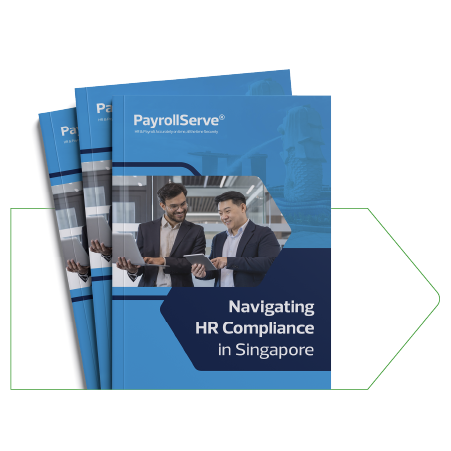
Whether you are an SME owner, HR practitioner or business leader, this guide serves as an easy-to-reference resource to support better HR decision-making and navigate Singapore’s changing employment landscape.
Still have questions?
Get in touch with our team to discuss your HR and payroll requirements and find out how we can support your organisation.
Download your Free Copy Now
Your Guide to HR Compliance in Singapore
Nine chapters covering employment law, payroll, CPF and workplace practices
Frequently Asked Questions
Who is the HR Compliance Guide Designed for?
This guide is designed for business owners, HR professionals, payroll practitioners, managers and SMEs looking for a practical reference to navigate Singapore's HR and payroll compliance requirements.
Is this Guide Suitable for Small and Medium Enterprises (SMEs)?
Yes. The guide is especially useful for SMEs that may not have dedicated HR or legal teams, providing an easy-to-reference overview of important employment and payroll compliance requirements in Singapore.
Is the HR Compliance Guide Free to Access?
Yes. Simply complete the download form to get immediate access to the Navigating HR Compliance in Singapore guide.
Is this the Latest Edition of the Guide?
This guide is the 2026 edition and is accurate as of 31 July 2026. As Singapore’s employment regulations and statutory requirements evolve, future editions will be updated to reflect relevant changes and ensure employers have access to the latest information.
What does the Employment Act cover in Singapore?
The Employment Act covers local and foreign employees working under a contract of service, including full-time, part-time, temporary and contract workers. It sets out key employment standards, with specific exceptions for domestic workers, seafarers and public officers. Explore Chapter 3 of the Navigating HR Compliance in Singapore guide for a closer look at the Act’s key provisions.
What is the Workplace Fairness Act and when will it take effect?
The Workplace Fairness Act establishes a legal framework to protect employees from workplace discrimination and promote fair employment practices. It marks a shift from existing fair employment guidelines towards legally enforceable workplace requirements and is expected to take effect from end 2027. For more on the Act and how employers can prepare, see Chapter 4 of the Navigating HR Compliance in Singapore guide.
What should employers know before hiring foreign employees in Singapore?
Employers must ensure foreign employees hold the appropriate work pass and meet the relevant eligibility requirements. They must also comply with requirements relating to work passes, levies and other foreign manpower regulations. Refer to Chapter 5 of the Navigating HR Compliance in Singapore guide for an overview of foreign manpower requirements.
What payroll requirements must employers comply with in Singapore?
Employers in Singapore must comply with key payroll requirements under employment regulations, including paying salaries on time, providing itemised payslips and making the required statutory contributions. Chapter 6 of the Navigating HR Compliance in Singapore guide provides an overview of key payroll administration requirements.
What are an employer’s CPF contribution obligations in Singapore?
Employers must make CPF contributions for eligible employees based on the applicable contribution rates and wage ceilings. Contributions must be calculated accurately and submitted within the required timeframe. Find out more about CPF requirements in Chapter 7 of the Navigating HR Compliance in Singapore guide.
What are an employer’s tax reporting obligations in Singapore?
Employers must report employee income to IRAS and fulfil the relevant annual tax reporting requirements. Accurate payroll and employee records should be maintained to support timely reporting. For an overview of key tax reporting requirements, refer to Chapter 8 of the Navigating HR Compliance in Singapore guide.